The 21st century worker will be a growth collar surfer, prioritising learning to learn, to buy a lifetime insurance to earn
Growth over ice cream!
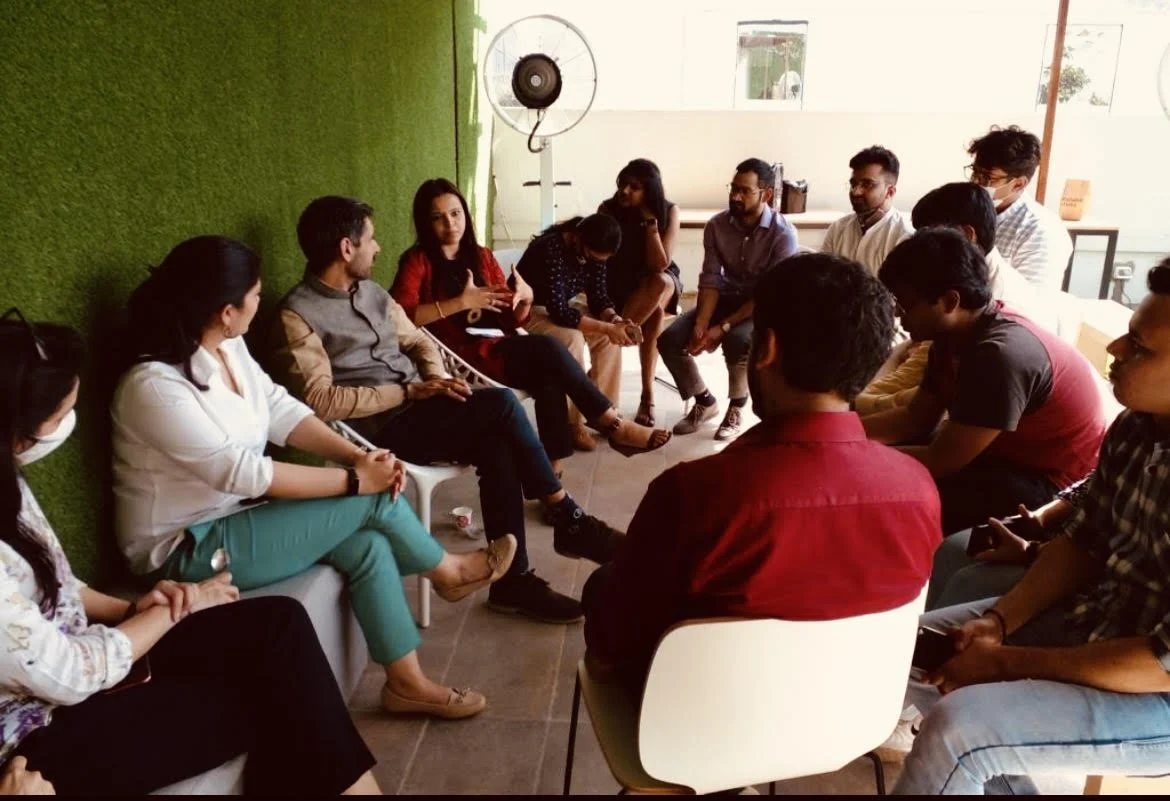
This essay was inspired from the Q3 goal setting discussion I had set up last week between my team and our CEO. We spoke about how relevant skills have become currency in the workplace, the role of technology, the transition from lifetime employment to lifelong careers, how to build muscle for growth, find purpose and most importantly have fun along the way!
History of work: blue collar and white collar
It was early in the 20th century when the colour of one’s collar demonstrated the kind of work one did. Blue collar work involved physical labour and was understood to be performed outdoor or in an industrial environment such as a factory. Manual labourers wore blue shirts so they could be dirtied without being easily visible. This prevented the need to wash the clothes regularly, saving money for the workers.

Examples of blue-collar jobs
Plumbers
Welders
Truck drivers
On the other hand, white collar work involved mental rather than physical labour and was understood to be clerical and administrative, taking place at an office. As the years went by, blue collar vs. white collar referred not only to a person’s line of work but also to their social status. Usually, people who had a blue collar job belonged to the working class and had a low income based on hourly wages. In comparison, white collar professionals were better educated and received a higher salary.
As industrial companies in the last century promoted the idea of a single long lasting 30 year old “lifelong career”, workers continued to build expertise in their respective domains while waiting to move up the hierarchical work ladder. Education was just a one time event and the chances of a cross over between the two sides of work were next to impossible.

Examples of white collar jobs
Clerks
Writers
Accountants
Work in the 21st century
The 21st century is proving to be very different with technology acting as a leveller and blurring the lines between these two kinds of work. While white collar jobs such as administrative assistants have had to switch from typewriters and dictation machines to PCs and voice memos, blue collar jobs such as assembly-line workers have had to learn to program robots and use sketch pads to print 3D models. As the rapid pace of technology makes many jobs, crafts, and skills go out of date in only a few years, expertise has an ever shorter shelf life. The idea of a single, long lasting career in one discipline is becoming a thing of the past. Everyone is expected to continuously learn new skills, new tools, and new systems to stay relevant.

Examples of growth collar surfers
Electric vehicle truck drivers
Factory robotic arm controllers
Writer turned entrepreneurs
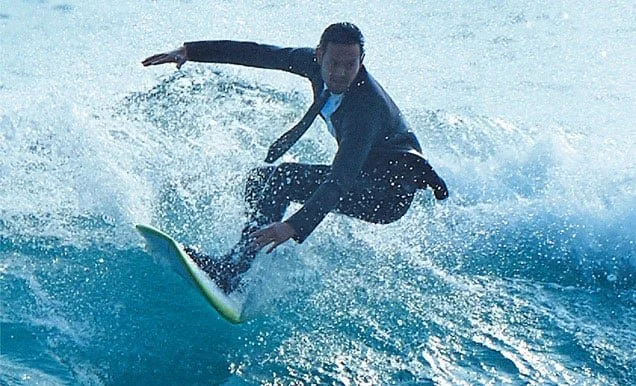
Today’s careers are like a series of waves from post-education to pre-retirement. We are like surfers catching a wave and riding it until it crests, and then, as it calms on the beach, we paddle out and catch the next one. In each new wave, we gain new skills and new experiences, retraining and educating ourselves along the way. This new world of work will be defined more by our ability to learn and grow than by the colour of our collar. The worker of the future will not be blue collar or white collar but rather a surfer with a growth collar.
How can each of us become a surfer?
The growth collar surfer will have 5 key traits.
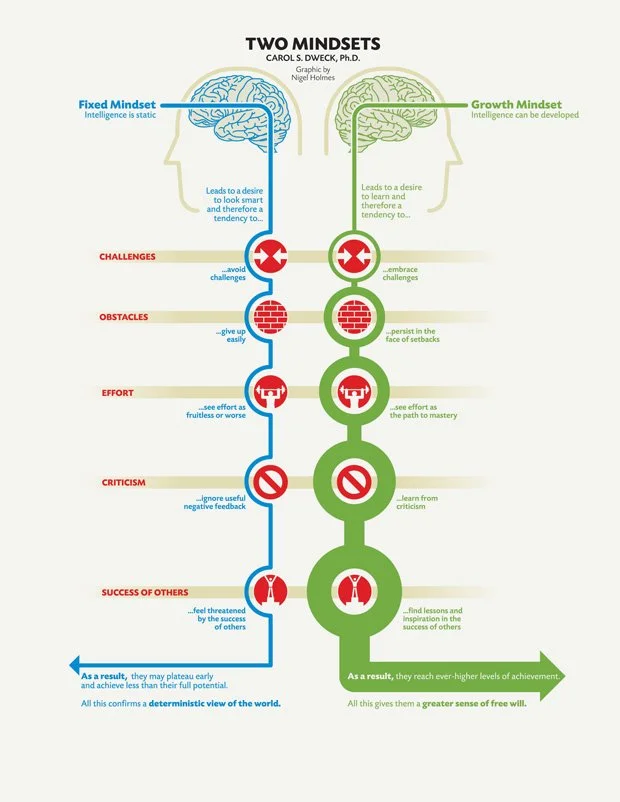
A Growth Mindset
Growth collar surfers have a belief that we have an unlimited capacity to learn and can put the brain to good use by devoting hours to deliberate practice. Many studies have confirmed that it is not intelligence that creates expertise but effort and practice. The brain is like a muscle and gets stronger with use, and learning prompts neurons in the brain to make new connections. Surfers tackle tasks beyond their current level of competence and comfort, observe the results and make adjustments.
Multidisciplinary Master
Traditionally, workers developed deep expertise in one discipline early in their career and supplemented this knowledge over the years with on-the-job development. This kind of knowledge is represented by a T-shaped profile (one horizontal block for broad competencies and one vertical block for deep expertise). Longevity has made this approach obsolete. Since 1840, life expectancy has increased three months every year, meaning that people are staying, and will continue to stay, in the workforce longer. Further, the rapid pace of technology makes many jobs, crafts, and skills go out of date in only a few years. Because of this trend, growth collar surfers need a M-shaped profile (the same kind of horizontal block for broad competencies but multiple vertical blocks for many kinds of deep expertise) to stay relevant.
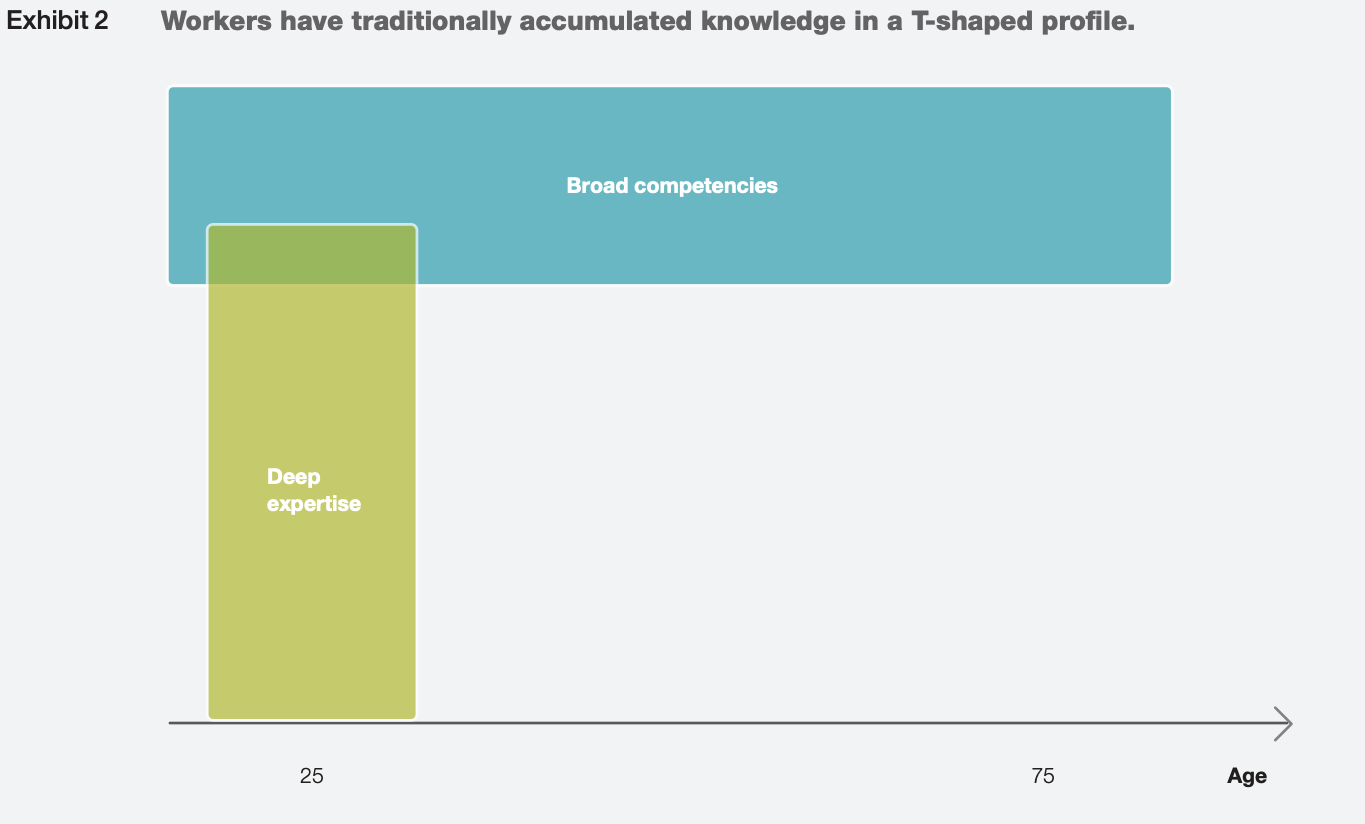
Source: Nick van Dam, Learn or Lose, Breukelen, Netherlands: Nyenrode Publishing, November 2016
Example of a T profile: Sales professional
Broad competencies: Communication, Empathy, Managing Teams
Deep expertise: B2B sales
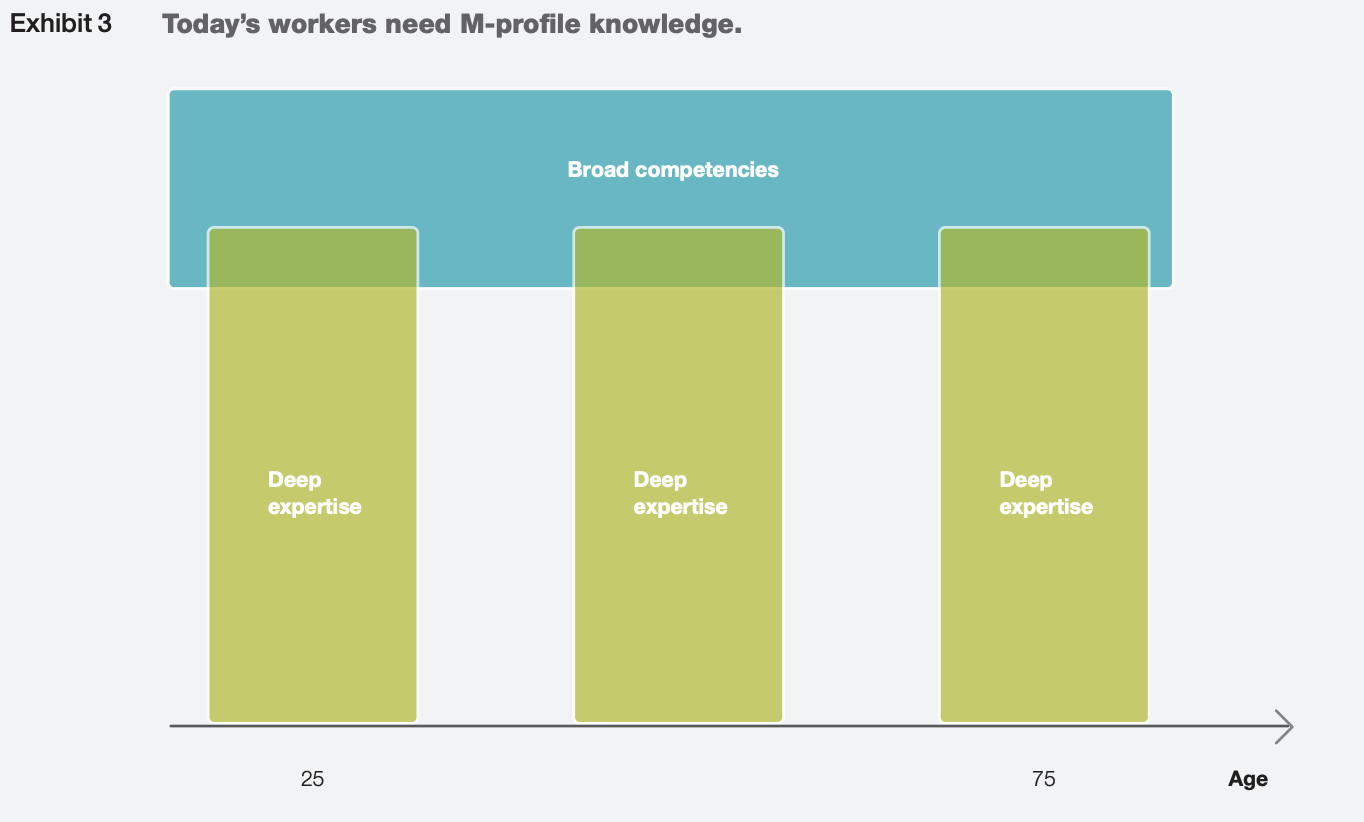
Source: Nick van Dam, Learn or Lose, Breukelen, Netherlands: Nyenrode Publishing, November 2016
Example of a M profile: Sales professional transitioning into a product professional
Broad competencies: Communication, Empathy, Managing Teams
Deep expertise: B2B sales, Customer success, Product management
Riding Uncomfortable S Curves
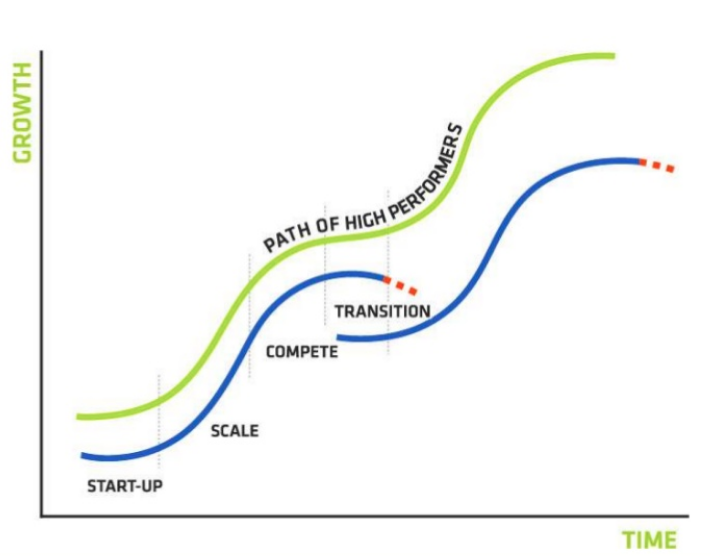
Many researchers have suggested that learning takes place only when people stretch outside their comfort zone into their learning zone. The personal growth and stretching that individuals experience from continued exposure to the learning zone typically follows a standard progression represented as an S-curve.
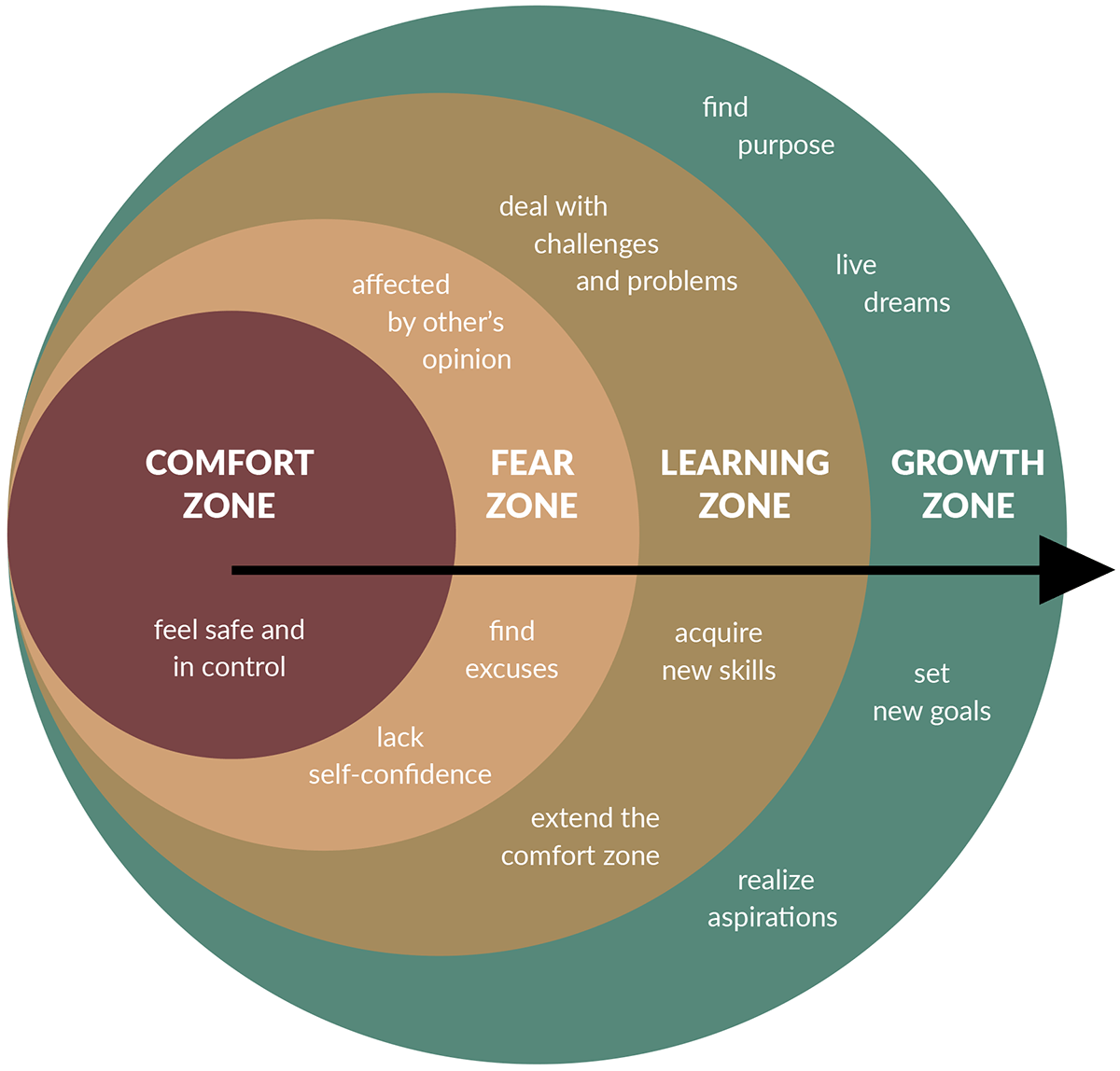
When people try something new, such as starting a new job, they are at the beginning of a new S-curve. They experience a steep learning curve in which their knowledge and skills increase rapidly. During this first stage of the S-curve, their progress and the business impact of their performance are limited. After a time, they reach an inflection point where their understanding, competence, and confidence suddenly accelerate very quickly, and they have an increasing impact on the business. Continuing in the role for a bit longer, they will reach the upper, flat part of the S-curve. At this stage, the excitement of the new role has worn off, personal learning and development have stalled, tasks and activities have become automatic, boredom has kicked in, and their impact on the business will slow down significantly. If people stay in their comfort zone—not seeking out new challenges or new roles—their performance may suffer, and they might even be replaced. Growth collar surfers, however, can avoid this pitfall and find new ways to stretch by starting a new S-curve.
Building A Brand
Everyone has a professional brand, whether it’s a carefully crafted expression of who they want to be or simply the impression they make on others. A brand that defines a person’s best elements and differentiates her is essential in achieving career goals—and in demonstrating her accomplishments, both to potential employers and current colleagues. When colleagues understand who a person is and what unique capabilities they bring to the table, that person is more likely to receive interesting new assignments or be considered first for new positions. A personal brand is not static—it should evolve over the course of a career. Since most people develop new skills and play different professional roles, they will need to rebrand themselves multiple times. Growth collar surfers use the process of building a brand to think through what skills they have and which ones they should develop to make themselves more marketable—both within a company and beyond.

Staying Vital
The ability to stay vital can contribute significantly to a person’s development. Growth collar surfers make health and well-being a priority— paying attention to exercise, nutrition, sleep, and relaxation (for example, mindfulness and yoga) and developing good, sustainable habits. The impact of such personal care and self-nurturing can have a huge impact on the surfers’ ability to acquire, retain, and retrieve knowledge.

Longevity in the workforce requires reinvention and growth. The ability to quickly adapt to the waves of challenge and difficulties, and transform them into opportunities allows each of us the opportunity to be a growth collar surfer. Nobody can control the waves. The only thing we can control is how we surf!